Have you ever pulled your climbing shoes out of your bag only to be hit by a wave of unbearable smell? If so, you’re not alone. Climbing shoes, while designed for performance, are also a hotspot for sweat, bacteria, and dirt.
Whether you’re climbing indoors or out on the crag, the combination of chalk, grime, and moisture builds up quickly, causing your shoes to smell and deteriorate over time. Cleaning your climbing shoes properly isn’t just about odour control, it’s about extending their lifespan, maintaining grip, and keeping your gear hygienic.
If you’ve wondered whether you can wash them, how to deodorise them, or how often they need a clean, you’re in the right place. In this guide, you’ll discover step-by-step techniques, tips, and product-free solutions to clean your shoes without damaging them. Let’s get into the dirt and how to scrub it out.
Why Do Climbing Shoes Get So Dirty and Smelly?

Climbing shoes are naturally prone to becoming dirty and smelly due to the conditions they are used in. From sweaty gym sessions to dusty outdoor routes, your shoes encounter everything from bacteria to chalk to mud.
Here’s why the grime builds up so fast:
- Enclosed design traps heat and sweat: The tight fit traps moisture, especially if you climb without socks.
- Frequent use in sweaty environments: Indoor gyms tend to have warm conditions, increasing foot sweat.
- Material absorbs moisture and bacteria: The soft lining and padding act like a sponge for odour-causing bacteria.
- Climbing chalk builds up: Chalk residue clings to both your feet and shoes, drying out rubber and holding in smells.
- Outdoor climbing introduces dirt, sand, and mud: The natural environment brings in debris and grit that embeds into the soles and upper fabric.
This combination creates the perfect storm for shoe odour and grime. Without regular cleaning and care, it gets worse each session. Some climbers even describe the smell as stronger than a pair of used football socks.
Addressing the cause early and cleaning properly is the key to maintaining your climbing shoes in top condition. In the next section, we’ll look at whether washing them is safe or a costly mistake.
Can You Wash Climbing Shoes Without Damaging Them?
It’s a common dilemma, your shoes stink and look filthy. The first instinct? Toss them in the washing machine. But is that safe? Not always. Most climbing shoe manufacturers advise against machine washing, especially in hot water.
Here’s why?
- Glue breakdown: High temperatures or strong detergents can weaken the glue holding your shoes together.
- Material shrinkage: Both leather and synthetic shoes can shrink or warp in the washer.
- Loss of grip: Harsh washing affects the rubber, leading to a loss of traction.
However, hand washing is considered safe for nearly all models when done correctly. In fact, brands like Scarpa support careful hand washing using minimal products.
Key things to keep in mind:
- Use lukewarm water only
- Avoid detergents with harsh chemicals
- Never use a tumble dryer
- Don’t soak them for too long
- Gently clean using soft tools
Some newer models, particularly synthetic ones, are marketed as machine-washable. If yours is one of them, always follow the manufacturer’s exact temperature and care guidelines.
For most climbers, though, the safest and most effective method is to hand wash your shoes. It’s gentle, effective, and avoids the risk of damage. Let’s break down the proper hand washing technique in detail.
What’s the Best Way to Hand Wash Climbing Shoes?
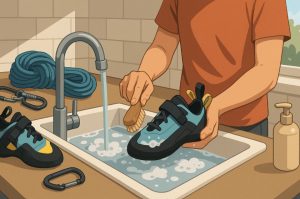
When it comes to deep cleaning your climbing shoes without compromising their fit or structure, hand washing is the best option. Unlike machine washing, hand washing offers full control, ensuring your shoes get clean without being damaged. Let’s explore how to prepare, clean, and rinse your shoes step-by-step.
How Do You Prepare Your Shoes for Cleaning?
Start by removing any debris like dried mud, sand, or chalk from the surface. Knock the soles together to loosen stubborn dirt, and wipe the uppers with a soft, damp cloth. Remove the insoles if they’re detachable. Preparing the shoes properly means the cleaning solution will be more effective.
What Cleaning Tools and Materials Do You Need?
- A soft-bristled brush (an old toothbrush works well)
- A clean microfibre cloth
- Lukewarm water
- Mild detergent (like unscented soap or laundry liquid)
- Baking soda or vinegar (optional for odour)
Step 1: Remove Dirt and Debris First
Use your cloth to wipe down the shoe exterior gently. Pay attention to creases near the toe box, heel, and under the laces or straps. Don’t scrub hard in sensitive areas. A quick brush along the rubber soles will also remove chalk and improve grip.
Step 2: Create a Mild Cleaning Solution
Mix a few drops of gentle detergent into a bowl of lukewarm water. The solution should be soapy but not overly sudsy. If you prefer a natural approach, you can use a vinegar and water mix or add a teaspoon of baking soda to neutralise odours.
Step 3: Scrub the Inside and Outside Gently
Dip your brush in the solution and gently scrub both the inside and outside of the shoes. Focus on the footbed where sweat collects most. Use circular motions and go lightly over the logo or branding areas. If the smell is strong, repeat this step twice with a fresh solution.
Step 4: Rinse Thoroughly Without Soaking
Rinse your shoes under lukewarm running water. Avoid soaking them in a bowl or sink. Instead, rinse in short bursts while wiping away excess soap. Squeeze gently to remove moisture without twisting or wringing.
Sunday Cleaning Tip Table:
| Task | Time Frame |
| Brushing off debris | 5 minutes |
| Mixing the cleaning solution | 2 minutes |
| Scrubbing shoes (inside/out) | 10–15 minutes per pair |
| Rinsing and final wipe | 5 minutes |
With your shoes now clean and soap-free, it’s time to focus on eliminating that lingering smell.
How Do You Get the Smell Out of Climbing Shoes?
Even after washing, climbing shoes can retain some funk. This is often due to bacteria embedded deep in the lining. Fortunately, there are a few tried-and-tested ways to deodorise them.
Which Natural Remedies Work Best for Odour?
- Baking soda: Sprinkle a small amount inside the shoes and leave overnight. It absorbs moisture and neutralises smell.
- White vinegar: Mix equal parts vinegar and water. Dab or lightly spray inside your shoes and air them out.
- Tea bags: Leave unused tea bags inside your shoes to absorb odour naturally.
- Sunlight (indirect only): A few hours in filtered sunlight helps kill bacteria, but avoid direct exposure to heat.
Can You Use Antibacterial Sprays Safely?
Yes, but choose those formulated for footwear or sports gear. Sprays with essential oils like eucalyptus or tea tree are effective and non-toxic. Spray lightly after washing and before drying. Don’t soak the material, as this can make the smell worse.
For best results, combine a deep clean with an odour solution. Addressing both dirt and bacteria ensures your shoes smell fresher for longer. Now let’s talk about drying them properly, which is just as critical as washing.
How Should You Dry Climbing Shoes After Cleaning?

Once you’ve washed your climbing shoes, drying them correctly is essential. Improper drying can ruin the shape, damage the glue, and reduce grip. The golden rule is simple: avoid heat.
Drying climbing shoes starts with removing as much water as possible without twisting the shoe. Gently press a clean microfibre towel inside the shoe to absorb interior moisture. You can also wrap the shoe in the towel and press firmly from the outside. This draws out excess water and cuts drying time significantly.
Here are the most effective ways to dry your climbing shoes:
- Air dry in a well-ventilated space
- Avoid radiators, tumble dryers, or direct sunlight
- Use a fan to speed up airflow
- Stuff them with newspaper or paper towels to maintain shape
Never hang your shoes upside down or leave them damp in a bag. This promotes mould and causes unpleasant odours to return. Let them breathe by keeping the straps open or tongues lifted for better circulation.
Drying is just as important as cleaning. It’s not enough to scrub your shoes clean, they need to be treated gently during drying to maintain their performance and shape. With the right approach, your shoes will be dry, fresh, and ready for your next climb.
How Often Should You Clean Your Climbing Shoes?
The frequency of cleaning your climbing shoes depends on how often and where you climb. A general rule is to clean them lightly after every use and deep clean them every 1 to 2 months.
Regular light maintenance includes:
- Wiping down the exterior with a damp cloth
- Brushing the rubber soles to remove chalk or dirt
- Leaving them to air out after every session
If you’re climbing indoors a few times a week, deep cleaning every 4–6 weeks is ideal. For outdoor climbers exposed to mud, sand, or rain, you may need to clean more often, especially if your shoes get visibly dirty or smelly.
Signs it’s time to clean your climbing shoes:
- Persistent odour despite airing them out
- Chalk or grime caked on the soles
- Reduced grip on footholds
- Moist interior or signs of mould
Avoid over-cleaning. Frequent washing can weaken the adhesives and degrade the materials faster than necessary. Instead, focus on prevention: keeping your feet clean, airing out your shoes, and using deodorising solutions between washes.
Establishing a simple cleaning schedule helps keep your shoes in great condition and reduces the need for intensive repairs or early replacements.
What Are the Best Ways to Prevent Climbing Shoe Odour?

Preventing odour is easier and more effective than constantly battling it. Once the smell sets in, it’s harder to remove, so proactive care is key.
Here are the best ways to prevent your climbing shoes from stinking:
- Air them out after every session: Don’t leave your shoes zipped in a gym bag. Open them up and allow air to circulate.
- Avoid wearing them for long periods: Take them off between climbs to reduce sweat build-up.
- Wear thin socks or liners: Socks reduce direct sweat contact with the shoe. Some climbers prefer barefoot for sensitivity, but a thin sock can help significantly with hygiene.
- Use moisture-absorbing inserts: Products like Boot Bananas or even DIY baking soda sachets help keep shoes dry.
- Keep your feet clean: Wash your feet before putting on shoes. Sweaty or dirty feet accelerate odour development.
- Apply a foot chalk or powder: Light dusting of climbing chalk helps reduce moisture inside the shoe.
Consistent care and proper storage make a huge difference. Odour doesn’t develop overnight, it’s the result of trapped moisture and bacteria over time. A clean shoe starts with clean feet and smart habits.
Do Different Materials Require Different Cleaning Methods?
Yes, the material your climbing shoes are made from affects how you should clean them. Leather and synthetic shoes behave differently when exposed to water, heat, and cleaning agents. Using the wrong method can damage one while having no effect on the other.
How Do You Clean Synthetic Climbing Shoes?
Synthetic shoes are typically more durable and less sensitive to water. Many are designed to handle light machine washing, but this is still not recommended unless the manufacturer explicitly approves it.
Instead:
- Hand wash with lukewarm water
- Use mild soap sparingly
- Focus on gentle brushing, especially on the inside
- Avoid soaking for long periods
- Air dry only, avoiding heat or direct sun
Synthetic materials are more prone to holding onto odours, so include a vinegar rinse or antibacterial spray in your routine.
What’s the Difference With Leather Models?
Leather climbing shoes, especially unlined ones, are more sensitive. They’re prone to shrinking and drying out if overexposed to water or heat.
- Avoid full submersion
- Use a damp cloth for surface cleaning
- Stick to brushing the inside gently
- Never use vinegar on leather, as it can degrade it
- Dry slowly and keep them stuffed to hold their shape
Here’s a comparison to help you remember:
| Feature | Synthetic Shoes | Leather Shoes |
| Water resistance | Higher | Lower |
| Tolerance to scrubbing | Moderate to high | Low |
| Odour retention | Higher | Lower |
| Risk of shrinkage | Low | High |
| Safe to machine wash | Sometimes (check label) | No |
| Cleaning method | Soapy brush + rinse | Damp cloth + gentle scrub |
Knowing your shoe type helps you avoid damage and choose the best care routine. When in doubt, go for the most gentle method possible.
Quick Comparison – Do’s & Don’ts of Cleaning Climbing Shoes
Proper climbing shoe care is all about understanding what helps and what harms. The table below offers a quick guide to best practices for cleaning and maintaining your shoes.
Here’s a side-by-side comparison of the do’s and don’ts:
| Do’s | Don’ts |
| Hand wash with mild soap and lukewarm water | Machine wash unless manufacturer-approved |
| Use a soft brush or toothbrush | Scrub aggressively or use wire brushes |
| Rinse quickly and thoroughly | Soak shoes for long periods |
| Air dry in a cool, shaded area | Dry with heat, radiators, or direct sunlight |
| Deodorise using natural solutions | Use strong chemicals or bleach |
| Store in a dry, breathable environment | Leave shoes in closed gym bags post-use |
| Wipe soles after each session | Climb with dirty soles – affects grip and wear |
| Know your shoe material before cleaning | Use the same method for leather and synthetic |
Each of these steps helps extend the life and improve the performance of your shoes. A little effort goes a long way. Regular care, not aggressive cleaning, is the true secret to long-lasting, fresh-smelling climbing shoes.
Conclusion
Cleaning your climbing shoes the right way doesn’t just keep them fresh, it protects your investment, performance, and hygiene. By understanding the causes of odour, using safe hand-washing methods, drying correctly, and tailoring your care to shoe materials, you ensure your gear stays in great condition for longer.
You don’t need fancy equipment or expensive sprays. With a soft brush, mild soap, and some patience, your shoes can look and feel almost new again. Regular maintenance and smart storage habits are what really make the difference.
Next time you unclip after a climb and catch a whiff of something funky, remember this guide. Clean shoes make for happier feet and a more enjoyable climbing experience.
FAQs
How long does it take for climbing shoes to dry?
It usually takes 12 to 24 hours for climbing shoes to air dry completely, depending on humidity and airflow.
Can baking soda ruin climbing shoes?
No, baking soda is safe in small amounts and effective for deodorising if used correctly and shaken out before wearing.
Is it okay to wear socks with climbing shoes?
Yes, thin socks can reduce sweat and smell, though they may slightly affect sensitivity on holds.
How do I stop shoes from smelling between climbs?
Air them out immediately after each session and store them with moisture absorbers like Boot Bananas or tea bags.
Should I clean new climbing shoes before use?
No, new shoes don’t need cleaning. Just air them out and use preventive care from the start.
What’s the safest disinfectant for climbing shoes?
Sprays made for sports gear or diluted white vinegar are safe options for disinfecting shoes without damaging them.
How do I restore grip to my climbing shoe soles?
Brush the rubber soles with a soft brush and wipe with a damp cloth to remove chalk, dirt, and grime.